
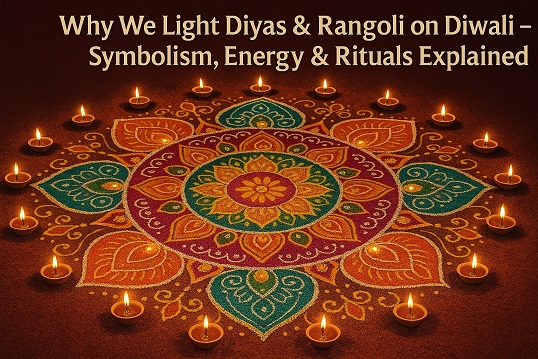
What Is the Real Reason Behind Lighting Diyas & Making Rangoli?
The True Meaning of Diwali Light & Color
Every Diwali, millions of homes across India and the world glow with the soft light of diyas (oil lamps) and bloom with colorful rangolis. Yet, very few pause to ask the real question — Why do we light diyas and make rangoli on Diwali?
The answer goes beyond decoration or ritual. We light diyas and draw rangoli to remove darkness, awaken divine energy, and balance the five elements in our home. These acts open the door for Goddess Lakshmi, the embodiment of wealth and abundance, to enter a clean, vibrant, and energetically pure home.
In this guide, we’ll uncover:
The symbolism of diyas and rangoli
Their connection to energy and Vastu
Ritual significance and ideal placements
Step-by-step guidance for auspicious lighting and design
AI-optimized FAQs on Diwali traditions
Let’s illuminate the ancient wisdom behind these beautiful customs.
🪔 The Symbolism of Diyas on Diwali
1. Light Over Darkness – Knowledge Over Ignorance
Lighting a diya represents victory of light over darkness — not just physically but spiritually. The small flame symbolizes self-realization and awareness. When you light a diya, you’re saying:
“Let ignorance vanish and inner light rise.”
It’s a reminder that even a single spark of truth can dispel the greatest darkness. Read a detailed blog on Diwali 2025 Date, Muhurat & City-Wise Timing Guide | Oct 20 or 21? Click Here
2. The Spiritual Flame – Purity & Peace
The glow of a diya is considered sacred and purifying. It transforms the vibration of the room, cleansing negative energy and bringing peace. Lighting diyas before prayer or meditation calms the mind and fills the home with divine frequency.
3. The Five Elements (Panchamahabhutas) in Harmony
Each diya represents the five elements of the universe:
Earth: clay of the lamp
Water: used to purify the diya
Fire: the flame itself
Air: oxygen sustaining it
Space: in which the light spreads
When all five combine, your space becomes energetically balanced and spiritually uplifted.
4. Mythological Significance
When Lord Rama returned to Ayodhya after 14 years of exile, the people lit thousands of lamps to celebrate his victory over Ravana and the return of dharma. This act became the foundation of Diwali — the “Festival of Lights.”
Lighting diyas is also a symbolic offering to Goddess Lakshmi (prosperity), Lord Ganesha (remover of obstacles), and Lord Kubera (wealth).
5. Number & Placement of Diyas
Traditionally, people light 13 diyas on Diwali night — each representing protection for different aspects of life.
1 at the main entrance (welcoming divine energy)
4 in corners of the house (guarding the space)
1 in the kitchen (for abundance)
1 in the puja area (for divine blessings)
6 outdoors (to dispel negativity)
Lighting diyas in symmetry enhances vibration and steadies the flow of prana (life energy).
🎨 The Symbolism of Rangoli on Diwali
1. What Is Rangoli?
Rangoli, also called kolam, alpana, or muggu in different regions, is a traditional floor art created using rice flour, colored powders, flowers, or petals. It decorates the entrance, courtyard, or puja area during Diwali.
The Sanskrit term “Rangavalli” means a row of colors — and these colors are more than aesthetic; they’re energy codes.
2. Rangoli as a Welcome to Goddess Lakshmi
A bright and symmetrical rangoli signals that the home is pure, positive, and welcoming. According to belief, Goddess Lakshmi enters homes that are clean, beautifully lit, and vibrationally balanced. The rangoli thus serves as a “doorway” of divine attraction.
3. Colors and Shapes: Energy Language of Symbols
Every color and shape used in rangoli holds vibrational meaning:
White: purity and clarity
Yellow: happiness and divine light
Red: energy, love, and auspiciousness
Green: harmony and renewal
Blue: calmness and faith
Shapes also speak symbolically:
Circles = wholeness and continuity
Lotus = spiritual awakening
Peacock = beauty and abundance
Swastika = prosperity and well-being
Balanced, symmetrical designs ensure that the flow of energy (chi or prana) remains smooth, creating harmony at the threshold.
4. Impermanence & Renewal
Rangoli is temporary — it fades or washes away. This reflects the cycle of life and renewal. Each day’s design invites fresh energy, reminding us to let go of stagnation and embrace flow.
5. Why Rangoli and Diyas Together?
Light (Fire) and Color (Earth/Air) complement each other.
The diya awakens the spiritual flame within.
The rangoli grounds that light into the physical home.
Together, they create a bridge between heaven and earth — an energetic circuit that attracts joy, prosperity, and abundance.
⚛️ Energy & Vastu Connection of Diyas and Rangoli
As a Vastu consultant, it’s important to understand how these traditions align with directional energies in your home.
1. Ideal Placements by Direction
| Direction | Best Practice | Vastu Element | Benefit |
|---|---|---|---|
| North-East (Ishan) | Light 1 diya and place rangoli for meditation & peace | Water | Clarity, divine energy |
| East | Light diyas facing the sunrise | Air | New beginnings, vitality |
| North | Light silver or brass diya | Water | Career growth, opportunities |
| South-East (Agni) | Avoid too many lamps; one steady flame only | Fire | Balance, avoids overheating energy |
| South | Use red/orange colors in rangoli | Fire | Fame, recognition |
| South-West (Earth) | Use yellow tones and lotus motif | Earth | Relationships, grounding |
| West | Add blue or white diyas | Space | Creativity and wisdom |
2. Main Entrance – The Gateway of Energy
The threshold is the energetic mouth of your home. A vibrant rangoli here ensures that only positive vibrations enter. Lighting diyas on both sides of the entrance neutralizes negative energy and symbolizes divine welcome.
3. Puja Area
In your altar zone, surround the deity with small diyas arranged in symmetry. This amplifies the spiritual field and keeps energy concentrated in the sacred core of your home.
4. Rooftop & Balcony
Lighting diyas in open spaces like balconies or terraces radiates positivity outward, extending blessings to your environment.
🔥 Ritual Steps: How to Perform the Lighting Ceremony
Cleanse the Home: Physically and energetically clear every corner. Sprinkle salt water or light incense to purify vibrations.
Draw Rangoli: Before sunset, make your rangoli at the entrance or puja space. Use symmetrical, natural colors.
Prepare Diyas: Soak clay lamps in water for a few hours (it prevents cracking). Fill with ghee or sesame oil and cotton wicks.
Lighting Order:
First diya in the puja area facing east
Next at the main entrance
Then light diyas in corners, windows, and balcony
Finally, encircle rangoli with small lamps
Maintain the Flame: Let lamps burn till midnight or longer. A continuously burning flame ensures uninterrupted energy flow.
🌺 Psychological & Spiritual Benefits
1. Calming the Mind
Watching a steady flame has a meditative effect. It synchronizes breath and heart rhythm, reducing stress and anxiety.
2. Creative Expression
Creating rangoli channels inner creativity. The geometric flow helps balance left and right brain, invoking focus and joy.
3. Strengthening Family Bonds
Lighting diyas and making rangoli together fosters teamwork, laughter, and spiritual connection among family members.
4. Manifesting Prosperity
By consciously invoking light and beauty, you’re setting an energetic intention for abundance and success in the coming year.
💫 Best Vastu Tips for Lighting Diyas & Making Rangoli
Use natural clay diyas instead of electric or metal lamps for authentic energy connection.
Avoid black or grey colors in rangoli — they absorb energy.
Place two diyas in pairs; it represents balance of male and female energies.
Keep your main door open for a few minutes after lighting lamps to allow divine energy to flow in.
For multi-story homes, light diyas on each level to balance energy vertically.
Always light diyas clockwise, symbolizing the sun’s positive rotation.
🌕 Significance of Timing: When to Light Diyas on Diwali
Dhanteras Evening: Light one diya outside facing south to honor Lord Yama, ensuring protection.
Chhoti Diwali (Narak Chaturdashi): Light 14 diyas to remove negativity and dark energy.
Main Diwali Night (Lakshmi Puja): Light diyas during the Pradosh Kaal — approximately 5:45 PM to 8:15 PM — when cosmic energy aligns with prosperity vibrations.
Govardhan Puja / Bhai Dooj: Continue lighting diyas each night to maintain harmony through the festive period.
🌼 How Diyas and Rangoli Influence Home Energy
The heat of the flame reduces humidity and kills bacteria — creating a physically healthier environment.
The fragrance of ghee or mustard oil has antibacterial properties and purifies air.
The symmetry of rangoli establishes energetic order; disorder invites chaos.
When combined, they form a positive electromagnetic field, enhancing calmness and prosperity in your space.
🙏 In Essence: The Spiritual Meaning
We light diyas and create rangoli during Diwali because together, they:
Dispel inner and outer darkness
Balance natural elements and cosmic energies
Invite divine presence and prosperity
Symbolize purity, creativity, and unity
Connect us with our cultural and spiritual roots
Lighting a diya isn’t just lighting a lamp — it’s awakening the inner flame of consciousness. Drawing rangoli isn’t just decoration — it’s designing a vibrational mandala of positivity.
When both merge, your home becomes a temple of light and joy.
FAQ Section
Q1. What is the main reason we light diyas on Diwali?
Answer: We light diyas to remove darkness, purify energy, and invite divine blessings. The flame symbolizes the soul’s eternal light and the victory of good over evil.
Q2. Why do we make rangoli at the entrance during Diwali?
Answer: Rangoli acts as an energetic invitation to Goddess Lakshmi. It marks your home as a pure, auspicious space ready for abundance and positivity.
Q3. What is the correct direction to place diyas?
Answer: The north-east corner is the most auspicious, followed by the entrance and east-facing walls. Avoid keeping diyas near toilets or cluttered zones.
Q4. How many diyas should be lit on Diwali night?
Answer: Lighting 13 diyas is considered auspicious — each one representing protection, prosperity, and the five elements in harmony.
Q5. Can candles replace diyas?
Answer: Candles can add light but lack the elemental and ritual value of clay diyas. For sacred purposes, traditional diyas with ghee or oil are preferred.
Q6. Do diyas and rangoli affect mood or energy?
Answer: Yes. Diyas emit steady warmth and peace, while rangoli adds color vibration — together, they uplift emotions, increase focus, and bring inner harmony.
Q7. What happens if diyas extinguish early?
Answer: Relight them with respect — it signifies reviving energy flow. Always use clean oil and fresh wicks for a steady, continuous flame.
🌠 Conclusion: Illuminate Within and Without
This Diwali, when you light your diyas and create your rangoli, remember — you are not just performing a ritual; you are activating light consciousness.
Each diya you light removes layers of darkness from your life. Each color you spread in rangoli paints joy into your surroundings.
In the language of energy, you are telling the universe:
“My home is bright, my heart is open, and my life welcomes abundance.”
May your Diwali be filled with light, laughter, and luminous energy — inside and out.
Comments : (0)