
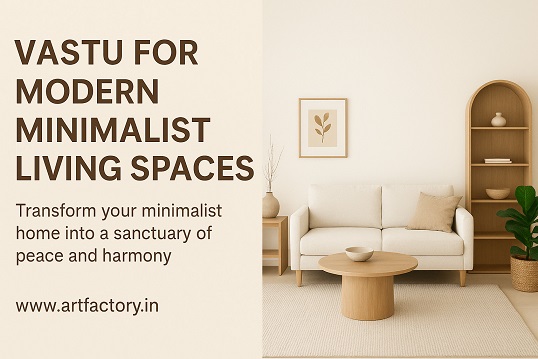
Vastu for Modern Minimalist Living Spaces
Your modern minimalist home can feel unsettled even with perfect styling. By applying the ancient design wisdom of Vastu Shastra—directional energies, elemental balance and spatial flow—you can transform it into a deeply supportive, calm and prosperous sanctuary. This guide walks you through how to merge minimalist aesthetics with Vastu for balance and clarity.
Vastu for Modern Minimalist Living Spaces
Is your modern minimalist home feeling… off? Like something’s just not quite right, even with all the clean lines and open spaces? You might be surprised to learn that ancient Vastu principles can unlock a deeper sense of peace and harmony in your minimalist haven. Discover how to effortlessly blend timeless wisdom with contemporary design to create a space that truly nourishes your soul.
Think Vastu is only for ornate, traditional homes? Think again. We’re busting the myth that Vastu doesn’t belong in your sleek, minimalist living space. What if incorporating subtle Vastu adjustments could be the missing piece to elevating your modern home from just “stylish” to “serene” and deeply fulfilling? Prepare to unlock the secret harmony within your minimalist haven.
Imagine a minimalist home that doesn't just look good, but feels incredible. A space that enhances your well-being, attracts positive energy, and truly supports your modern lifestyle. This isn't about cluttering your aesthetic; it's about strategically optimizing your minimalist layout using ancient Vastu principles to create a sanctuary of peace, productivity, and profound tranquility.
Why Minimalist Homes Need Vastu
Minimalist homes often feature open floor plans, few accessories, neutral palettes and sleek furniture. While this creates visual calm, it can sometimes feel “flat” or lacking in energetic support. That’s where Vastu enters—offering a framework to align direction, element and flow.
Vastu Shastra, the ancient Indian science of architecture and space, teaches that a home isn’t just physical: it is a living field of energy interacting with the five elements and directional forces. UltraTech Cement+2Wikipedia+2
Modern research into minimalist design often focuses on decluttering and light flow. Vastu complements this by addressing how energy flows through the home and how direction, shape and element placement can support well-being. Yoga Journal+1
As one architecture-review noted: “Even a modern home with glass facades and Italian flooring can be Vastu-aligned with correct orientation and design intent.” Around Town Realty+1
The benefit: your minimalist décor stays intact while energy becomes aligned — you keep the style, enhance the support.
In short: Minimalism gives the “look”; Vastu gives the “feel”.
Core Vastu Principles for Modern Minimalist Interiors
Here are the foundational elements you want to weave into your minimalist home:
1. Direction-based energy
Each orientation in Vastu carries a unique quality:
North (Water element) – opportunity, flow, clarity
North-East (Water) – wisdom, meditation, health
East / East-North-East (Air element) – fresh energy, creativity, new beginnings
South-East / South (Fire element) – fame, recognition, power, change
South-West (Earth element) – stability, relationships, foundation
West / West-South-West (Space element) – knowledge, rest, introspection
These associations enable you to place rooms, furniture or décor with direction-intention.
2. Elemental balance (Earth, Water, Fire, Air, Space)
In a minimalist space, you often remove “extras” — that means the elements must be represented consciously:
Water: smooth reflective surfaces, glass, gentle curve
Fire: lighting, warm accents, red-orange touches
Air: open windows, movement, light fabrics
Earth: solid grounding furniture, natural textures
Space (Ether): uncluttered centre, clear zones
When you consciously combine minimalist aesthetics with elemental symbolism, the space doesn’t just look sparse—it resonates. Yoga Journal+1
3. Centre of home – Brahmasthan
In Vastu the central zone (Brahmasthan) should be kept open, with minimal obstruction. It amplifies energy flow and clarity. For a minimalist home this is a natural ally: keeping the centre free aligns with minimalist design and Vastu alike. Yoga Journal
4. Clutter-free, light-filled, simple geometry
Minimalism promotes clean geometry (squares and rectangles) and simplicity. Vastu also recommends square or rectangular rooms and spaces to maintain energy balance. Light, natural lighting and unobstructed spaces help energy circulate.
How to Apply Vastu in Your Modern Minimalist Home
Below are actionable steps organised by space and direction to help you align your home energetically without sacrificing minimalist aesthetics.
1. Entry & living zone
Ensure your main door is well-lit, clean, opens smoothly, and ideally faces North, East or North-East. This invites positive energy. Architectural Digest India+1
Keep the foyer area free from clutter, shoes stacked, or heavy décor blocking flow. Minimalism meets Vastu.
In the living room, place heavy furniture (sofa, sideboard) along South or West walls; keep seating facing North or East for good interaction and energy reception. Architectural Digest India
Use soft, muted neutrals or light palettes to maintain simplicity and calm—over-bold colours might jar the minimalist flow.
2. Kitchen & dining
The kitchen falls under the fire element, thus best placed in South-East or South zones.
In a minimalist kitchen, maintain clean lines: integrate appliances, hide clutter, keep counters streamlined. Combine with Vastu by placing stove in South-East, and keep the sink (water element) separate.
For dining, keep the table in East or West, make sure movement around the table is clear and open — no tight corridors or blocked access.
Read a detailed blog Vastu for Abundance: Kitchen Design for Prosperity Click Here
3. Bedroom
Ideally locate on South-West for grounding energy. Head of the bed should be against a solid wall — avoid placing under a beam or directly facing a door.
Minimal décor: choose a calm palette, avoid too many strong visuals. Windows should allow natural light but with simple treatments (e.g., soft blinds).
Keep electronics minimal in the sleeping zone to preserve restful energy.
4. Meditation / Study / Peace corner
Use a corner in North-East or East-North-East for study or meditation. This harnesses water/air element energies of clarity and creativity. Yoga Journal
Keep it extremely minimal: a low cushion, a small table, one piece of meaningful art or décor. No clutter.
Natural light and ventilation matter — let fresh air flow freely.
5. Bathroom, storage & service zones
Bathrooms and utility zones are best placed in North-West or West to allow movement of water away from central life zones.
In minimal homes, hide utilities behind doors or cabinets, keep surfaces plain and leak-free — stagnant water or clutter can disrupt energy flow.
Storage rooms or closets should ideally be in South-West or North-West—keep them tidy and minimal. Heavy storage in South-West anchors the space.
6. Colour, materials & décor accents
Minimalist style thrives on neutral palettes (white, light grey, beige). Vastu supports these for calm, clear energy.
Add one accent piece aligned with correct direction: e.g., a fire-red or orange abstract painting on a South wall to enhance fame/recognition.
Use natural materials—wood, stone, textured fabrics—these align with Earth and Space elements and give warmth to minimal interiors.
7. Art, décor & symbolic elements (aligned with your Vastu-expertise)
In a minimalist home, each décor piece should have intention. For example:
On the East wall, a painting of butterflies or flying kites (air element) to evoke lightness and creativity.
In the North wall, a calm river landscape (water element) to invite opportunity and flow.
On the South wall, a mountain painting (earth element) to ground ambition and success.
Limit décor to one or two meaningful objects per wall — this retains minimalism and enhances energy rather than cluttering.
Explore our collection of vastu paintings click here
Common Myths About Vastu in Minimalist Homes – Busted
Myth: “Vastu can’t apply unless I build a traditional house.”
Truth: Modern architecture and minimalist décor absolutely can respect Vastu. Many architecture firms design contemporary homes with Vastu alignment.Myth: “I must fill every direction with décor and symbols.”
Truth: Minimalist design values space — Vastu doesn’t demand clutter. It demands correct placement and unobstructed flow. A few high-intent pieces are far more effective.Myth: “Vastu is rigid and impractical for modern homes.”
Truth: While rooted in ancient texts, Vastu is adaptable. Many modern homes successfully apply its principles without compromising aesthetics. UltraTech Cement
Afaqs
Q1: What is Vastu for modern homes and how does it differ from traditional Vastu?
A1: Vastu for modern homes adapts the ancient architecture science of Vastu Shastra — which emphasises five elements and directional energies — to contemporary layouts, minimalist décor and modern materials. While traditional Vastu emphasises specific temple-style houses, modern Vastu focuses on energy flow, orientation and element balance in any home. Wikipedia+1
Q2: Can a minimalist home benefit from Vastu without losing its clean design?
A2: Absolutely. A minimalist home can remain sleek and uncluttered while aligning with Vastu by focusing on direction-based placement, elemental accents, open centre zones and meaningful décor. The aesthetic is enhanced—not compromised—by the harmony created.
Q3: Which directions are important in Vastu for a minimalist living room?
A3: For the living room in a minimalist space: place heavy furniture against the South or West walls, and orient seating so that individuals face North or East. Ideally locate living areas in North, East or North-East zones to facilitate positive energy flow. Architectural Digest India+1
Q4: How do I choose colours and materials in a minimalist home with Vastu?
A4: Choose neutral base colours (white, beige, light grey) for calmness and clarity. Use one or two accent hues that correspond to direction—e.g., red/orange for South wall (fire element). Natural materials (wood, stone, textured textiles) support the earth and space elements. Maintain minimalist simplicity to allow energy to circulate.
Q5: What are quick Vastu fixes I can apply in an existing minimalist home?
A5:
Clear the central zone (Brahmasthan) of obstructions.
Adjust heavy furniture placement: move large items to South/West walls.
Introduce elemental accents: a water feature or glass piece in North, fire-toned art in South.
Ensure main entrance is unobstructed, well lit and preferably facing North/East.
Declutter and remove excess décor from high-traffic zones to allow free energy flow.
Putting It All Together: A Minimalist Vastu Action Plan
Here’s a simple 5-step plan to integrate Vastu into your modern minimalist home:
Map your floor plan, identify North, East, South, West. Note which zones correspond to each direction.
Declutter the centre of your home—remove heavy furniture or blockages. Create open space in the Brahmasthan.
Assign rooms by direction: living area in North/East, kitchen in South-East/South, bedroom in South-West. Where rooms cannot move, adjust décor and orientation.
Simplify furniture placement: heavy items on South/West walls, seating facing North/East, work zones in East/North-East.
Choose minimal décor with intention: select one or two meaningful pieces per wall that correspond to element and direction. Stick to neutral base palette; accent with direction-appropriate colour.
By following this plan, your minimalist home doesn’t just remain stylish—it becomes a space that supports your wellbeing, boosts clarity, enhances productivity, and invites harmony.
Why This Matters for Your Life, Work & Well-being
When your home supports your energy rather than drains it, you’ll notice real changes:
Increased mental clarity and calm (thanks to aligned Air and Water elements).
Enhanced focus and productivity—ideal for work-from-home in a minimalist layout.
Better rest and relationship harmony through grounding Earth/Space placements.
Elevated sense of success and recognition when Fire zones (South) are tuned.
A sanctuary feeling: your home is not just visually clean but energetically uplifting.
As a Vastu consultant specialising in modern décor, I guide clients to turn their contemporary apartments, homes and offices into spaces that look great and feel aligned.
Final Thoughts
A minimalist home doesn’t have to compromise on Vastu—it can embrace it. By blending directional wisdom, elemental balance and clean aesthetics, you create a living environment that looks elegant and feels alive.
Your home becomes not just a place to live—but a sanctuary that enhances, uplifts and supports you.
If your space has been feeling “off” despite perfect styling, remember: sometimes the missing piece isn’t the look—it’s the energy. With a few thoughtful shifts guided by Vastu, your modern minimalist haven can become both beautiful and deeply fulfilling.
Feel free to reach out if you’d like a tailored Vastu-check for your minimalist home or guidance on selecting artwork, décor or layout adjustments—happy to help you create the balanced space you deserve.
Comments : (0)