
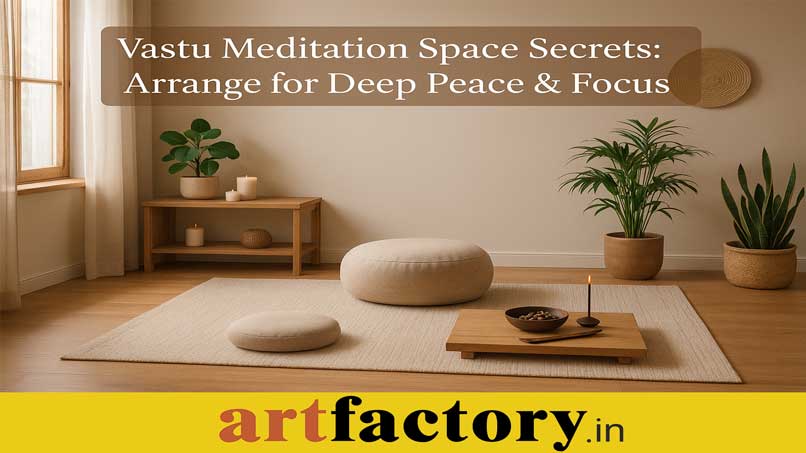
Vastu for Meditation Space | Create a Serene & Powerful Meditation Room with Vastu
Introduction: Why “Where” Is as Important as “What” in Meditation
What if the secret to profound inner peace wasn’t just what you meditate on, but where you meditate? A meditation space aligned with cosmic energies will amplify your focus, stillness, and spiritual connection.
In this guide, you’ll discover how Vastu Shastra can guide the optimal placement of directions, elements, materials, décor, and energy flow in your meditation room. You’ll learn actionable tips you can implement immediately—even in a small corner or apartment—to transform your meditation practice from good to extraordinary.
1. Vastu Foundations: Why Direction & Element Matter
1.1 The Science of Vastu & Energy Flow
Vastu Shastra is the ancient Indian science of architecture and spatial energy alignment, focusing on integrating buildings with natural forces and geometry. Wikipedia
In Vastu, the five elements—earth (Prithvi), water (Jal), fire (Agni), air (Vayu), and space (Akasha)—must be balanced and harmonized in each room to ensure smooth energy (Prana) circulation.
A meditation space is more than décor; it’s a microcosm that harmonizes your inner being with universal energies.
1.2 Ideal Directions for Meditation (Ishaan & East)
According to most Vastu guidelines, the northeast (Ishaan corner) is considered the most auspicious zone for meditation, worship, and spiritual practice. vastutruth.com+2yogainternational.com+2
Why the northeast? Because it combines the water (subtle) and space energies, enabling subtle vibrations and clarity.
If northeast is not available, the east direction (sunrise direction) is the next best. Facing east while meditating aligns you with the rising sun’s purity and youth energy. vastutruth.com+2The Times of India+2
Some Vastu articles also mention that the center (Brahmasthan) can act as an energy-concentrating zone and sometimes is used for a meditation corner if no better direction is available. yogainternational.com+1
Rule of thumb: Your meditation seat should face east or northeast, and the space should be located in the north-east segment of your room or home if possible.
2. Step-by-Step Guide to Building Your Vastu Meditation Space
Below is a practical roadmap you can follow to transform any nook into a powerful meditation haven.
2.1 Choose the Right Location in Your Home
Preferably Northeast or East zone: As explained, this direction attracts positive vibrations.
Quiet & sheltered: Away from high-traffic hallways, kitchens, bathrooms, or noisy spots.
Natural light & ventilation: A gentle window or opening toward east or north helps bring fresh prana. yogainternational.com+2The Times of India+2
Avoid under beams, low ceilings, or clutter zones: Overhead obstructions block subtle energy flow.
If your home doesn’t allow ideal placement, choose a corner or nook you can treat symbolically as sacred—clean it, frame it, and elevate intention.
2.2 Floor, Seating & Platform Design
Floor material: Use natural materials—wood, bamboo, or stone are excellent choices. Avoid synthetic flooring in the meditation zone.
Raised platform or mat: A low platform or cushion mat is good; keep it simple, stable, and comfortable.
Seat direction: Place your meditation seat (cushion, pad, chair) so you face east or northeast.
Keep floor clean & plain: No heavy patterns or chaotic rugs—let the base remain serene.
2.3 Wall Colors and Décor
Color tones: Whites, off-whites, light creams, pale greens or pastel blues are favorable because they ease the mind. Architectural Digest India+2yogainternational.com+2
Avoid bold, loud colors like bright red or dark purple in walls—these may overstimulate.
Accent wall: If painting one wall, choose the east or northeast wall, and it could have a soft element image (sunrise, lotus, serene mountain).
Art & symbolism: Use peaceful art—mandalas, soft landscapes, spiritual geometry, Buddha silhouette, or spiritual symbols. Place them on the north, east, or northeast walls.
Avoid aggressive or dark imagery (e.g., war scenes, intense animals) in this area.
2.4 Altar, Sacred Objects & Focus Point
Altar position: Northeast of the meditative corner is ideal for placing small altar, deity, or sacred object.
What to place: You can include a small lamp (diya), crystals, incense holders, photos of gurus or spiritual symbols, mala beads, or light water bowl.
Do not clutter: The altar should be minimal and intentionally arranged.
Facing: If there is an idol or image, it should face east or north, so the devotee faces west or south toward it. vastutruth.com+2Architectural Digest India+2
2.5 Elemental Harmony: Water, Fire, Air & Plants
Water element: A small glass bowl with pure water or floating petals, or even a desktop fountain (silent) in northeast. But avoid large aquariums. yogainternational.com+2Kaarwan+2
Fire element: Use a small lamp or candle (beeswax or pure ghee). If you use aromatic candles, do so carefully and safely.
Air (Vayu): Open window or vent for soft airflow. Gentle breeze brings fresh energy.
Plants: Small, low-maintenance indoor plants (like peace lily, money plant) in north or northeast enhance life force. Avoid thorny plants like cactus.
Crystals & stones: Clear quartz, amethyst, selenite, or pairs of crystals can be placed symmetrically near the altar.
Space (Akasha): Keep center of the space uncluttered—empty space is the medium for energy to flow.
2.6 Lighting: Natural & Artificial
Natural light: Morning light from east or northeast windows enhances clarity and calm.
Curtains / Shades: Use sheer, light-colored curtains to diffuse harsh light.
Soft artificial lighting: Use warm LED or dimmable lights; indirect lighting (behind alcoves or under shelves) works well. Avoid overhead harsh lights.
Lamp placement: Place a lamp on altar or in northeast, but never cast shadow onto your seat.
2.7 Sound, Aroma & Acoustics
Soft ambient sound: Gentle flute, singing bowls, or nature sounds at low volume enhance focus. Avoid high-pitched or loud music.
Sound absorbing features: If your space is echoey, use soft rugs, cushions, wall fabric panels to muffle harsh echoes.
Aroma & scent: Sandalwood, lavender, jasmine, frankincense are favorable. Use natural incense or essential oil diffusers (not chemical ones).
Cleansing rituals: Occasionally use aromatic smudging (sage, palo santo) or ringing a bell/ gong to clear stagnant energy.
2.8 Storage, Organization & Clutter Management
Minimalism: Only include what’s essential—mat, cushion, altar items, journal.
Hidden storage: Use concealed compartments or simple baskets to keep meditation tools (mala beads, books) out of view when not in use.
Clear floor & surfaces: Avoid scattered items, wires, chargers. Keep the area visually and energetically clean.
Wall hooks: If needed, wall-mounted hooks or small shelves are better than floor-level racks.
2.9 Regular Cleansing & Energy Maintenance
Daily cleaning: Sweep, dust, freshen the space gently before your meditation practice.
Energetic cleansing: Weekly or monthly rituals—smudging, singing bowl cleanse, sound waves, or simply opening windows to let fresh air.
Set intention: Before each meditation, set your intention aloud in the space (e.g. “May this space be sacred, clear, and aligned”).
Offer prayers or gratitude: A brief ritual touching your altar or offering flowers helps raise the vibration.
3. Directional & Spatial Remedies (When Ideal Placement Isn’t Possible)
Even if your home layout prevents perfect northeast placement, there are remedies:
Use mirrors or reflective surfaces (on the north or east wall) to symbolically “pull” energy.
Use light color schemes (white, cream) to expand perceived space energy.
Place a Shree Yantra or sacred geometry chart facing the seat to stabilize energy.
Use Vastu pyramids or copper coils in corners for energetic correction.
Keep heavy furniture and clutter away from the meditation zone, especially in southwest or northwest corners.
Use indoor plants or wind chimes in northwest to balance movement energy.
Paint upper walls or ceiling with light pastel shades so higher energy can rise unobstructed.
4. Case Examples & Evidence
Many Vastu and yoga sources recommend placing meditation or prayer rooms in northeast to harness cosmic energies. yogainternational.com+3Architectural Digest India+3vastutruth.com+3
Yoga International notes that both northeast and center are ideal zones, and that a water feature in the northeast enhances flow. yogainternational.com
Architectural Digest suggests light colors (light yellow, white, green) for meditation/yoga rooms to foster calm and clarity. Architectural Digest India
In the “Designing a Spiritual Retreat” article by Kaarwan, Vastu tips for meditation focus on directional zones, décor, and energy alignment. Kaarwan
While empirical scientific validation of Vastu is limited, many users report greater ease in concentration and peace when following these spatial principles—so the “evidence” often comes from experience and testimonials. Use what resonates, test, and refine.
5. FAQ's
Q1: Which direction should I face while meditating as per Vastu?
A: As per Vastu, you should face east or northeast while meditating. This aligns you with rising sun energy and optimal prana flow.
Q2: Where in the house is best to locate a meditation room in Vastu?
A: The northeast (Ishaan) zone of your home is most auspicious. If not possible, choose east or a quiet zone treated with sacred intention.
Q3: Which colors are ideal for a Vastu-aligned meditation space?
A: Soft, light tones like white, cream, pale green, or soft blue help calm the mind. Avoid harsh, dark, or overly stimulating colors.
Q4: Can I have a meditation area in a small apartment or shared room?
A: Yes. Even a small corner can be empowered if you designate it, keep it clean, align direction, use minimal décor, and apply Vastu corrections (reflective surfaces, sacred symbols).
Q5: What elements should I include in my meditation space (water, fire, plants)?
A: Include one or more subtle elements: a small water bowl in the northeast, a candle/lamp, indoor plants (non-thorny), crystals, and gentle airflow are recommended.
Q6: What should I avoid placing in the meditation area?
A: Avoid clutter, mirrors facing the seat directly, aggressive imagery, sharp objects, loud electronics, and heavy furniture in the meditation zone.
Q7: How often should I cleanse or energize the meditation space?
A: Ideally daily physical cleaning and energetic cleansing weekly or monthly (smudging, sound, intention) helps maintain high vibration.
Q8: Can Vastu really improve my meditation and inner peace?
A: While scientific data is limited, many meditators affirm that a space aligned to Vastu feels more supportive, less distracting, and accelerates calmness. Use your intuition along with guidelines.
6. Tips for International & Apartment Homes
In high-rise apartments without perfect layouts, treat a corner (preferably NE of your unit) as symbolic northeast.
Use floor tapes or markings to designate sacred zones.
Use reflective surfaces (small mirror) or light elements to amplify energy.
Use portable altar tables or foldable screens to define the space.
If walls or windows don’t face east/ne, place directional markings (compass, directional sticker) to orient your meditation seat correctly.
Combine Vastu with local spatial constraints (e.g. Feng Shui windows, lighting), always honoring energy flow over rigid rules.
7. Integrating Feng Shui Principles (Optional but Complementary)
Feng Shui’s “Bagua corner” for spirituality often overlaps with Vastu’s northeast. Use crystals or plants in that zone.
Use soft mirrors or light in north or east in Feng Shui to draw chi.
Avoid clutter in “command positions”—your seat should see the room entrance.
Use subtle water features or fountains (quiet) to support Qi flow.
Use subtle yin décor (soft curves, light fabrics) to support Vastu’s gentle energy orientation.
8. Conclusion & Implementation Checklist
Quick Vastu Meditation Space Checklist
| Step | Action | Aligns With |
|---|---|---|
| 1 | Choose northeast or east corner | Directional harmony |
| 2 | Face east / northeast while seated | Align yourself with energy |
| 3 | Use calm colors & minimal décor | Mental ease |
| 4 | Add subtle water, fire, plants, crystals | Element balance |
| 5 | Altar in NE with sacred items | Focus & devotion |
| 6 | Use natural light & soft artificial lights | Clarity & calm |
| 7 | Maintain cleanliness & energetic rituals | Sustained vibration |
With intention, attention, and a willingness to refine over time, your meditation space will evolve into a sacred sanctuary that supports ever-deepening inner stillness.
May your practice be blessed, and may your space guide you gently into infinite calm. 🕉️
Comments : (0)