
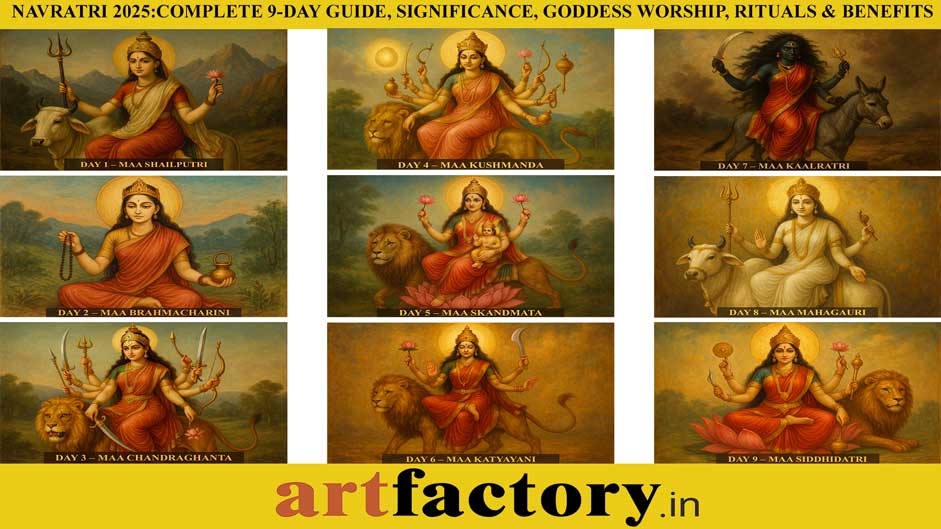
Navratri: Complete 9-Day Guide, Significance, Goddess Worship, Rituals & Benefits
Navratri is a nine-day festival dedicated to Goddess Durga and her nine divine forms, celebrated with devotion, fasting, and rituals across India and globally. Each day is associated with a specific goddess, a color, and unique spiritual significance, offering devotees blessings for health, wealth, prosperity, courage, and spiritual growth.
This blog will guide you through all 9 days of Navratri, including:
The importance of each day
Goddess to worship and her symbolism
Rituals, offerings, and fasting guidelines
Spiritual, material, and health benefits
Vastu tips for harmony and energy
FAQs for devotees
This guide is designed to help you celebrate Navratri with devotion and maximum blessings, making it both SEO- and AI-search friendly for global audiences.
Day 1 of Navratri: Maa Shailaputri
Goddess Worshipped: Maa Shailaputri
Color of the Day: Red
Significance: Symbolizes purity, strength, and new beginnings
Maa Shailaputri, daughter of the mountains, marks the start of Navratri. She is revered for courage, determination, and spiritual awakening. Worshipping her brings discipline, focus, and positive energy.
Rituals & Offerings:
Wear red clothes
Offer red flowers and fruits
Recite the Shailaputri mantra: “ॐ देवी शैलपुत्र्यै नमः॥”
Benefits:
Enhances courage and confidence
Promotes new beginnings
Protects against negativity
Day 2 of Navratri: Maa Brahmacharini
Goddess Worshipped: Maa Brahmacharini
Color of the Day: Blue
Significance: Represents devotion, austerity, and penance
Maa Brahmacharini symbolizes inner strength and spiritual growth. Worshipping her encourages patience, focus, and wisdom.
Rituals & Offerings:
Wear blue or light-colored clothes
Offer lotus flowers, fruits, and water
Chant the Brahmacharini mantra: “ॐ देवी ब्रह्मचारिण्यै नमः॥”
Benefits:
Enhances wisdom and devotion
Strengthens mental and spiritual resilience
Attracts peace and prosperity
Day 3 of Navratri: Maa Chandraghanta
Goddess Worshipped: Maa Chandraghanta
Color of the Day: Yellow
Significance: Symbolizes courage, power, and prosperity
Maa Chandraghanta, with a crescent moon on her forehead, removes fear and negativity. She blesses devotees with confidence, energy, and wealth.
Rituals & Offerings:
Wear yellow clothes
Offer yellow flowers and sweets
Chant the Chandraghanta mantra: “ॐ देवी चंद्रघंटायै नमः॥”
Benefits:
Removes fear and anxiety
Enhances courage and determination
Promotes prosperity and success
Day 4 of Navratri: Maa Kushmanda
Goddess Worshipped: Maa Kushmanda
Color of the Day: Green
Significance: Goddess of cosmic energy and creation
Maa Kushmanda, the creator of the universe, brings abundance, health, and energy. She is worshipped to boost vitality, wealth, and spiritual growth.
Rituals & Offerings:
Wear green clothes
Offer green leaves, fruits, and flowers
Chant the Kushmanda mantra: “ॐ देवी कुशमंडायै नमः॥”
Benefits:
Enhances health and energy
Attracts wealth and abundance
Supports spiritual awakening
Day 5 of Navratri: Maa Skandamata
Goddess Worshipped: Maa Skandamata
Color of the Day: Grey
Significance: Mother of Skanda/Kartikeya, symbolizes motherly love and compassion
Worshipping Maa Skandamata provides wisdom, maternal blessings, and protection. She nurtures spiritual growth and family harmony.
Rituals & Offerings:
Wear grey or sky-colored clothes
Offer lotus flowers, fruits, and milk
Chant the Skandamata mantra: “ॐ देवी स्कंदमातायै नमः॥”
Benefits:
Enhances family happiness
Protects children and family members
Promotes emotional balance
Day 6 of Navratri: Maa Katyayani
Goddess Worshipped: Maa Katyayani
Color of the Day: Red
Significance: Warrior goddess symbolizing strength and victory
Maa Katyayani blesses devotees with courage, marital blessings, and triumph over obstacles.
Rituals & Offerings:
Wear red clothes
Offer red flowers, honey, and sandalwood paste
Chant the Katyayani mantra: “ॐ देवी कात्यायन्यै नमः॥”
Benefits:
Brings success in marriage and career
Provides courage and fearlessness
Removes negativity and obstacles
Day 7 of Navratri: Maa Kaalratri
Goddess Worshipped: Maa Kaalratri
Color of the Day: Blue / Black
Significance: Fierce goddess who removes fear and negativity
Maa Kaalratri destroys all forms of evil and darkness, protecting devotees from harm.
Rituals & Offerings:
Wear blue or black clothes
Offer red hibiscus flowers, jaggery, and sesame seeds
Chant the Kaalratri mantra: “ॐ देवी कालरात्र्यै नमः॥”
Benefits:
Eliminates fear and anxiety
Provides protection and courage
Promotes mental clarity
Day 8 of Navratri: Maa Mahagauri
Goddess Worshipped: Maa Mahagauri
Color of the Day: White / Light Pink
Significance: Goddess of purity, serenity, and wisdom
Maa Mahagauri blesses devotees with peace, purity, marital happiness, and prosperity.
Rituals & Offerings:
Wear white or light pink clothes
Offer milk, fruits, and milk-based sweets
Chant the Mahagauri mantra: “ॐ देवी महागौर्यै नमः॥”
Benefits:
Purifies mind and body
Enhances family harmony and love
Brings spiritual enlightenment
Day 9 of Navratri: Maa Siddhidatri
Goddess Worshipped: Maa Siddhidatri
Color of the Day: Golden / Yellow
Significance: Bestower of divine powers, success, and spiritual enlightenment
Maa Siddhidatri grants wisdom, siddhis, and ultimate success to devotees. Worshipping her completes the Navadurga cycle of Navratri.
Rituals & Offerings:
Wear golden or yellow clothes
Offer yellow flowers, fruits, and laddoos
Chant the Siddhidatri mantra: “ॐ देवी सिद्धिदात्री नमः॥”
Benefits:
Provides success and prosperity
Grants spiritual enlightenment
Protects from obstacles and negativity
❓ FAQs About Navratri
Q1: What is Navratri and why is it celebrated?
Navratri is a nine-day festival dedicated to Goddess Durga and her nine forms, celebrated for spiritual growth, prosperity, and protection.
Q2: Which goddess is worshipped each day of Navratri?
Day 1: Maa Shailaputri
Day 2: Maa Brahmacharini
Day 3: Maa Chandraghanta
Day 4: Maa Kushmanda
Day 5: Maa Skandamata
Day 6: Maa Katyayani
Day 7: Maa Kaalratri
Day 8: Maa Mahagauri
Day 9: Maa Siddhidatri
Q3: What are the colors for each Navratri day?
Red, Blue, Yellow, Green, Grey, Red, Blue/Black, White/Light Pink, Golden/Yellow
Q4: What are the benefits of observing Navratri?
Spiritual purification
Courage and strength
Health and vitality
Wealth and prosperity
Family harmony and protection
Q5: Can Navratri rituals be done at home?
Yes, with devotion, proper puja setup, offerings, and chanting mantras, one can receive maximum blessings from each goddess.
Comments : (0)