
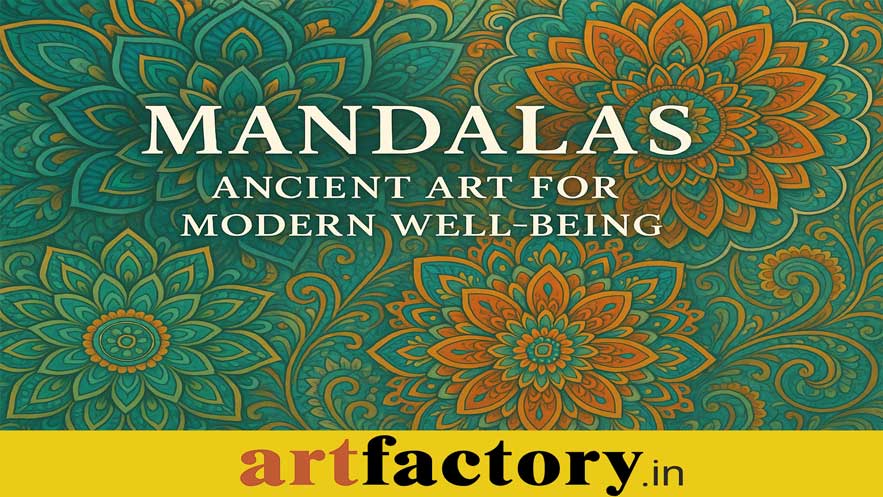
Mandalas: Ancient Art for Modern Well-Being
In today’s fast-paced, stressful, and technology-driven lifestyle, people are constantly searching for ways to calm their minds and nurture their inner peace. One of the most profound tools rediscovered in recent times is the Mandala. While mandalas may look like simple geometric or circular art patterns, their roots stretch back thousands of years and across many cultures—from Hinduism and Buddhism in the East to Native American traditions in the West.
This blog explores how mandalas, an ancient spiritual art form, have transformed into powerful tools for modern well-being, mindfulness, and healing.
What is a Mandala? The Sacred Circle of Life
The word “mandala” comes from the Sanskrit language, meaning circle. Mandalas are intricate geometric designs arranged in a circular pattern, symbolizing the universe, wholeness, and balance.
Traditionally, mandalas were used in temples, meditation practices, and rituals to represent the cosmos and guide spiritual journeys. Today, psychologists, healers, and even art therapists recommend mandalas for stress reduction, relaxation, and self-expression.
The Ancient Origins of Mandalas
Mandalas have been part of multiple traditions across civilizations:
Hinduism: Mandalas appear in Yantras and temple architecture, symbolizing divine energy and cosmic order.
Buddhism: Tibetan monks create intricate sand mandalas as a meditative practice, later dismantled to remind us of impermanence.
Native American Culture: Medicine wheels and dreamcatchers reflect mandala-like designs symbolizing harmony and nature cycles.
Celtic Culture: Knots and circular motifs represented eternity and interconnectedness.
This cross-cultural presence proves that the mandala is not just an art form, but a universal language of spirituality and healing.
Why Mandalas Matter in Modern Life
In modern times, mandalas are more than spiritual symbols—they are scientifically backed wellness tools. Research in psychology and art therapy shows mandalas help reduce anxiety, boost creativity, and promote relaxation.
Here’s why they matter today:
Stress Relief: Coloring or meditating with mandalas calms the nervous system.
Focus & Mindfulness: The circular patterns encourage concentration, ideal for meditation.
Emotional Healing: Mandalas provide a safe space for self-expression.
Spiritual Growth: They remind us of the bigger picture of life and universal connection.
Creativity Boost: Creating mandalas awakens intuition and artistic flow.
Mandalas and Psychology: Carl Jung’s Contribution
The famous psychologist Carl Jung introduced mandalas to Western psychology. He observed that patients who drew mandalas experienced self-discovery and emotional healing. For Jung, the mandala was a representation of the “Self”—the center of one’s personality and inner balance.
This connection bridges ancient spirituality with modern psychology, making mandalas relevant not just in religious or cultural contexts but also in therapeutic and scientific practices.
Benefits of Mandala Art for Well-Being
1. Stress Reduction & Relaxation
Studies show that coloring mandalas lowers cortisol levels, leading to relaxation. This is why adult mandala coloring books have become popular worldwide.
2. A Tool for Meditation
Focusing on mandala patterns helps calm wandering thoughts, bringing the mind into the present moment. It’s a visual mantra that aids meditation.
3. Enhancing Focus & Productivity
Spending a few minutes with mandalas before work or study sessions enhances concentration. The repetitive, symmetrical patterns train the brain to focus.
4. Emotional Healing
Mandalas allow people to express hidden emotions. Therapists use mandala drawing as a method for patients dealing with trauma, grief, or anxiety.
5. Balance & Harmony
The circular form reflects wholeness and helps restore inner balance, which is crucial in today’s fragmented lifestyle.
Mandalas in Everyday Modern Practices
You don’t need to be a monk or artist to benefit from mandalas. Here are simple ways to integrate them into your daily life:
Mandala Coloring Books: Widely available and ideal for stress relief.
Digital Mandalas: Mobile apps and websites offer interactive mandala designs for relaxation.
Home Décor: Hanging mandala paintings or tapestries can enhance positive energy in living spaces.
Meditation with Mandalas: Gaze at a mandala during meditation to deepen focus.
Journaling: Combine mandalas with affirmations in your personal diary.
Mandalas in Vastu & Feng Shui: Energy Balancers
From a Vastu Shastra and Feng Shui perspective, mandalas are not just art pieces but energy harmonizers.
North Wall: Placing a mandala here supports career growth and clarity.
East Wall: Boosts creativity, knowledge, and fresh opportunities.
South Wall: Enhances fame and recognition.
Meditation Room / Northeast Zone: Mandala paintings or designs here improve focus, meditation, and inner peace.
By combining the ancient wisdom of Vastu with modern mandala art, you can transform your home into a sanctuary of balance.
Mandala Art Forms: From Sacred Sand to Digital Designs
Sand Mandalas: Created by Tibetan monks with colored sand, representing impermanence.
Painted Mandalas: Traditional paintings for temples and meditation.
Geometric Mandalas: Symmetrical patterns used in meditation and yoga.
Contemporary Mandalas: Modern artists use mandalas in digital art, tattoos, and even fashion.
This evolution shows how mandalas adapt to every era, including our digital world.
How to Create Your Own Mandala for Healing
You don’t need professional skills—anyone can create mandalas:
Start with a circle.
Divide it into symmetrical sections.
Add repeating patterns—flowers, shapes, or symbols.
Color it intuitively.
Use it as a personal meditation or affirmation tool.
The act of creating itself is deeply meditative, making it one of the best forms of art therapy for self-healing.
Mandalas and Spiritual Growth
Mandalas remind us that life is a cycle—of beginnings and endings, challenges and lessons, creation and dissolution. Meditating on mandalas brings clarity about life’s purpose, helping us feel connected to the universe.
In a world full of distractions, mandalas serve as anchors for mindfulness, spiritual awakening, and self-realization.
Evidence-Based Research on Mandalas
American Journal of Art Therapy: Found that mandala coloring helps people with PTSD and anxiety.
Harvard Research on Meditation: Showed that meditative focus on symbols like mandalas reduces stress and enhances brain activity.
Clinical Psychology Studies: Mandalas are proven tools in trauma recovery and mental health improvement.
This shows that mandalas are not just spiritual myths, but scientifically backed methods for well-being.
Frequently Asked Questions (FAQs)
Q1. What is the main purpose of a mandala?
Answer: A mandala represents wholeness, balance, and the universe. In modern use, it serves as a tool for meditation, stress relief, and emotional healing.
Q2. How do mandalas reduce stress?
Answer: Mandalas engage the brain in focused activity, which shifts attention from stressors, lowers cortisol levels, and induces a state of relaxation.
Q3. Can I use mandalas even if I’m not spiritual?
Answer: Yes. Mandalas are universal tools. You can use them for artistic expression, therapy, or simply as beautiful décor.
Q4. Where should I place a mandala in my home?
Answer: For positivity and balance, place mandalas in the Northeast for meditation, North for career, or East for creativity.
Q5. Are mandalas scientifically proven to help?
Answer: Yes. Psychological and clinical studies show that mandalas reduce stress, improve focus, and aid emotional recovery.
Conclusion: Mandalas as Timeless Healers
Mandalas are ancient art forms with timeless wisdom, yet they fit seamlessly into modern lifestyles. Whether through coloring books, meditation practices, or home décor, mandalas are powerful tools to restore balance, reduce stress, and promote inner peace.
In an era where people seek both spiritual depth and practical wellness, mandalas provide the perfect bridge between ancient sacred geometry and modern well-being science.
By embracing mandalas in daily life, you invite harmony, mindfulness, and healing into your world.
Comments : (0)