
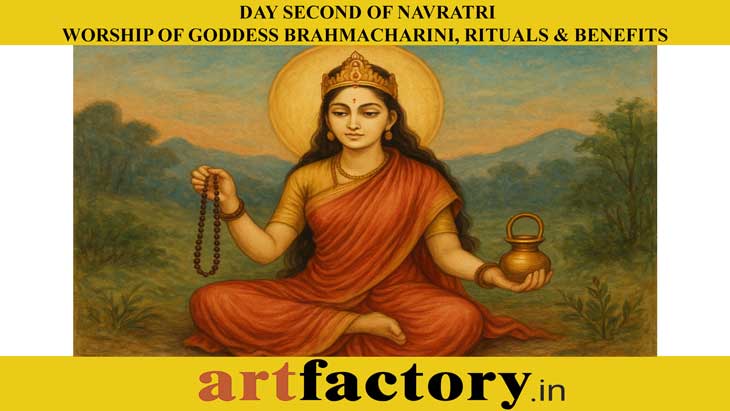
Day Second of Navratri : Worship of Goddess Brahmacharini, Rituals & Benefits
The festival of Navratri unfolds like a spiritual journey, each day honoring a unique form of the Divine Mother. After invoking Goddess Shailaputri on the first day, Day Second of Navratri on 23 September 2025 is dedicated to Goddess Brahmacharini—the symbol of penance, devotion, and unwavering determination.
Worship on this day is believed to grant spiritual clarity, mental strength, peace of mind, and protection from misfortune. In this detailed guide, we’ll cover:
Importance of Day 2 of Navratri
Who is Goddess Brahmacharini & Her significance
Rituals, fasting rules & offerings for benefits
Vastu placement for puja
Spiritual and material benefits of Day 2 worship
Common mistakes to avoid
FAQs with scriptural and practical insights
Table of Contents
Why Day Two of Navratri is Special
Date & Muhurta for Day 2: 23 September 2025
Who is Goddess Brahmacharini? Symbolism & Meaning
Rituals & Practices for Day 2
Mantras, Prasad & Flowers for Worship
Vastu Tips for Day Two Puja
Benefits of Worshiping Goddess Brahmacharini
Mistakes to Avoid on Day Two
FAQ – Frequently Asked Questions
Conclusion
1. Why Day Two of Navratri is Special
The second day of Navratri represents discipline, inner strength, and meditation. After grounding oneself with Goddess Shailaputri’s blessings on Day 1, Day 2 takes the devotee deeper into self-control and devotion.
It is associated with long-term focus and patience.
Worship on this day removes doubts, confusion, and laziness.
It strengthens resolve, endurance, and willpower, much like the Goddess’s own penance.
Energetically, Day 2 is a powerful time to pray for peace, improved relationships, education, and career stability.
2. Date & Muhurta for Day 2: 23 September 2025
Date: 23 September 2025 (Tuesday) – Dwitiya Tithi of Shardiya Navratri.
Muhurta: The puja should be performed during the auspicious Dwitiya Tithi, ideally in Brahma Muhurta (pre-dawn hours) or early morning. Evening Sandhya Aarti is equally powerful.
3. Who is Goddess Brahmacharini? Symbolism & Meaning
Name Meaning: Brahmacharini = One who follows the path of Brahma (supreme consciousness) with austerity and devotion.
Iconography: She holds a rosary (mala) in one hand and a kamandalu (water pot) in the other, symbolizing simplicity, faith, and discipline.
Energy Representation: She embodies Tapas (penance), Sadhna (spiritual practice), and inner calm.
Mythological Significance: In her previous birth as Sati, she undertook severe penance to marry Lord Shiva. This form represents that intense discipline and perseverance.
4. Rituals & Practices for Day 2
To fully benefit from this day’s energy, follow these rituals:
4.1 Morning Purification
Bathe early in the morning, wear clean clothes (preferably white, light yellow, or green).
White symbolizes purity, calmness, and meditation—the qualities of Brahmacharini.
4.2 Installation of Idol or Image
Place an image or idol of Goddess Brahmacharini on a clean altar.
Adorn the idol with white flowers, sandal paste, and sacred cloth.
4.3 Offerings & Prasad
Offer white lotus, jasmine, or marigold flowers.
Prasad: Sugar, mishri (rock sugar), or fruits are most auspicious. Kheer (rice pudding) is also considered a divine offering.
Lighting a ghee lamp is essential, as it represents wisdom.
4.4 Fasting & Self-Discipline
Many devotees observe a strict fast, consuming only fruits, milk, and water.
Some follow a sattvic diet (avoiding onions, garlic, and grains).
The focus is on simplicity and self-restraint, reflecting the Goddess’s own penance.
4.5 Chanting & Meditation
Main Mantra:
“Om Devi Brahmacharinyai Namah” (chant 108 times).Recite Durga Saptashati, Devi Stuti, or Devi Mahatmya for deeper devotion.
Meditation with a focus on discipline, patience, and calmness enhances spiritual strength.
5. Mantras, Prasad & Flowers for Worship
| Element | Recommended Offering | Significance |
|---|---|---|
| Mantra | Om Devi Brahmacharinyai Namah | Enhances patience & devotion |
| Flowers | Jasmine, lotus, white rose | Purity & spiritual focus |
| Prasad | Sugar, mishri, kheer, fruits | Sweetness & inner peace |
| Lamp | Ghee diya with two wicks | Light of wisdom & dual balance |
6. Vastu Tips for Day Two Puja
Place the idol or photo of Goddess Brahmacharini in the East direction, as it is associated with wisdom and clarity.
Northeast corner (Ishan Kon) is also highly auspicious for meditation and puja.
Use white or light green cloth beneath the idol for harmony.
Avoid placing the idol facing South.
If possible, create a serene, clutter-free puja area with fresh flowers and fragrance.
7. Benefits of Worshiping Goddess Brahmacharini
When Day 2 rituals are performed sincerely:
Spiritual Benefits: Increases focus in meditation, removes inner restlessness, brings calmness.
Mental Strength: Helps overcome indecisiveness, anger, and impatience.
Career & Studies: Students and professionals gain improved focus and discipline.
Relationships: Enhances patience in relationships, reduces conflicts.
Health: Fasting detoxifies body, strengthens immunity, balances energy.
Wealth: Removes financial instability caused by lack of planning or discipline.
8. Mistakes to Avoid on Day Two
Avoid anger, arguments, or speaking harshly.
Do not consume tamasic food (onions, garlic, meat, alcohol).
Avoid laziness or skipping puja.
Never offer stale flowers or leftover prasad from previous day.
Avoid placing the Goddess’s idol on unclean surfaces.
Read a detailed blog on : Day First of Navratri : Importance, Goddess Worship & Rituals for Maximum Benefits click here
9. FAQ – Frequently Asked Questions
Q1: Which Goddess is worshiped on the second day of Navratri?
Answer: Goddess Brahmacharini, symbol of penance and devotion, is worshiped on Day 2.
Q2: What should I offer to Goddess Brahmacharini?
Answer: White flowers, sugar, mishri, fruits, and kheer are most auspicious offerings.
Q3: Which color is worn on the second day of Navratri?
Answer: White is the most recommended color, representing purity, peace, and meditation. Some traditions also suggest light yellow or green.
Q4: Is fasting compulsory on Day Two?
Answer: Not compulsory, but highly beneficial. Even if you eat, prefer sattvic food. The main focus should be on discipline and devotion.
Q5: What are the benefits of worshiping on Day Two?
Answer: It strengthens patience, improves mental focus, balances emotions, and supports career, education, and relationships.
10. Conclusion
The second day of Navratri on 23 September 2025 is devoted to Goddess Brahmacharini, the embodiment of penance, devotion, and inner strength. By performing puja, fasting, chanting mantras, and following Vastu principles, devotees align with the qualities of patience, endurance, and clarity.
Observing this day properly not only strengthens spiritual sadhna but also brings peace, focus, and prosperity into life. Begin with a pure heart, disciplined mind, and unwavering faith—and let Goddess Brahmacharini guide you towards inner light.
Comments : (0)